
In this article
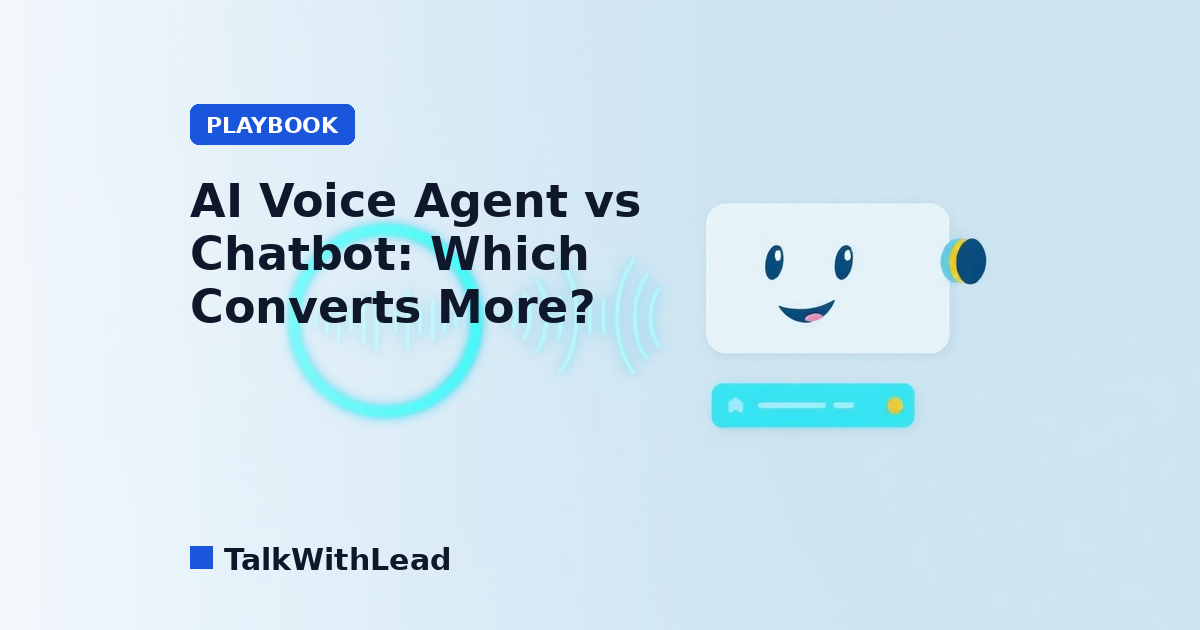
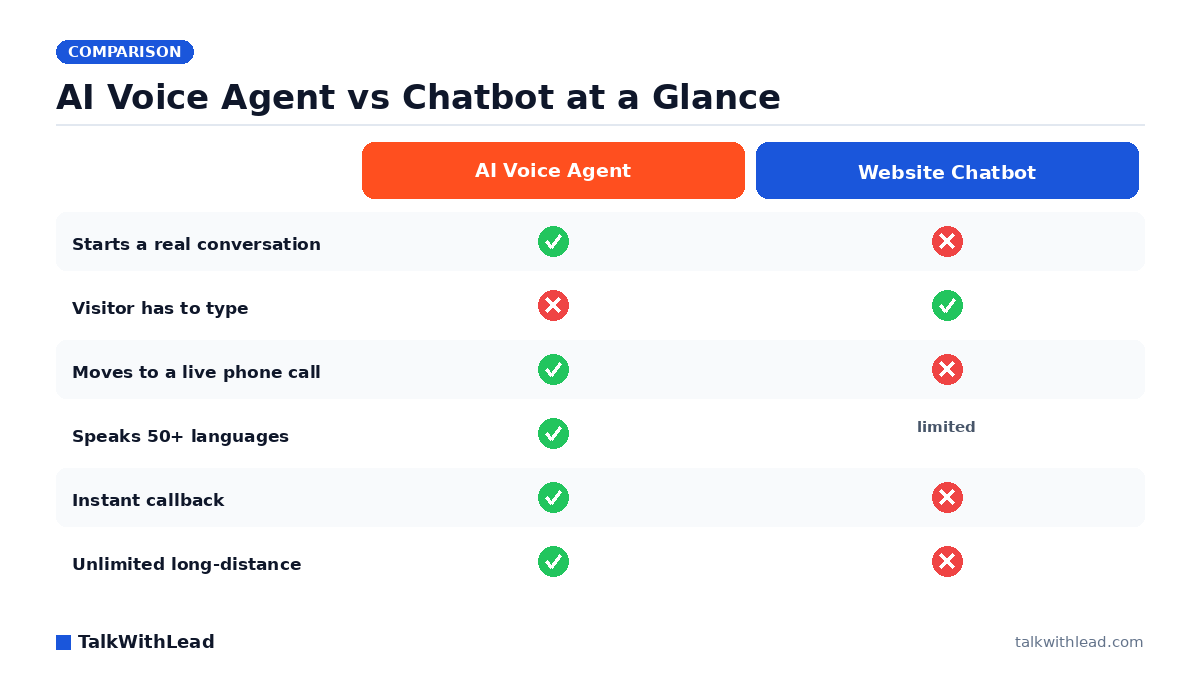 AI Voice Agent vs Chatbot at a Glance — TalkWithLead original infographic (comparison diagram).”/>
Why the conversion gap is bigger than it looks
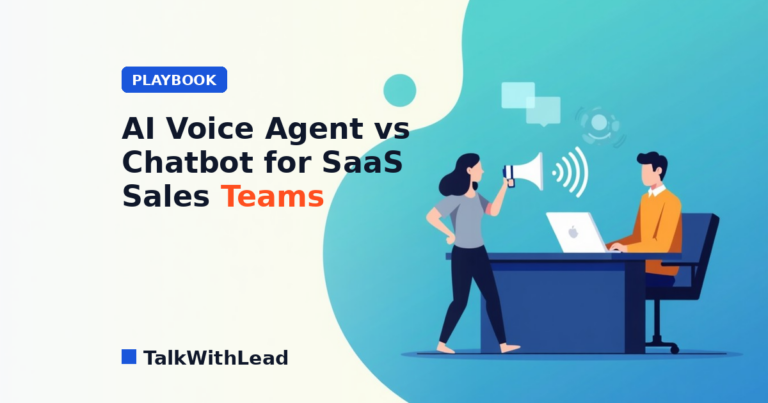
The ai voice agent vs chatbot conversion rate question usually gets answered with a feature checklist. The real answer is simpler: a voice agent starts a conversation, and a chatbot starts a chore. One asks a visitor to speak; the other asks them to read a greeting, type a question, wait, read again, and hope the bot understood. Every one of those extra steps is a place where a ready-to-buy visitor quietly leaves.
That matters because the visitor who lands on your pricing page at 9:47 p.m. is not browsing. They are deciding. A human-sounding AI voice agent can answer them out loud in seconds and offer to put them on a call right then. A chatbot, at best, captures an email and adds them to a queue you will work tomorrow, which is often a day too late.
How a chatbot actually loses high-intent visitors
Chatbots are not useless. They deflect support tickets and answer FAQs at scale. The trouble shows up on conversion-focused pages, where the goal is not to inform a visitor but to win one. Here is where the friction stacks up:
- Typing tax. Most people speak far faster than they thumb-type on a phone. Forcing a buyer to type their question slows the whole exchange to a crawl.
- Scripted dead-ends. The moment a visitor asks something off-script, a rules-based bot stalls and the visitor blames your brand for it.
- No handoff to a human. Even when a chatbot senses high intent, the usual next step is “leave your email” — not “talk to someone now.”
- Language walls. A buyer who prefers Spanish, Tagalog, or Portuguese often gets an English-only widget and bounces.
If you want a deeper breakdown of where text-based tools fall short, our piece on live chat versus chatbots and the AI voice upgrade walks through each option side by side.
What an AI voice agent does differently
An AI voice agent flips the interaction. Instead of waiting for the visitor to compose a message, it greets them in a natural, human-sounding voice and handles the back-and-forth out loud. The visitor talks the way they would to a salesperson on the showroom floor, and the agent listens, answers, qualifies, and offers the next step.
Three capabilities change the math:
- 50+ languages. The agent meets visitors in their own language, so a multilingual market stops being a leak in your funnel.
- Instant callbacks. If a visitor would rather get a call in two minutes, the agent arranges it instead of dropping them into a form.
- Unlimited long-distance calling. A prospect three time zones away connects with no concern about call cost on your side.
The net effect is fewer steps between “interested visitor” and “live conversation.” That compression is the whole game. You can try a live demo and hear how the voice agent handles a real exchange before you decide anything.
An illustrative conversion comparison
The following numbers are an illustrative example, not measured results from a specific customer. They show how small per-step drop-offs compound differently for typing versus talking.
Imagine 1,000 high-intent visitors hit a service page in a month. With a chatbot, suppose 12% open the widget, 60% of those actually type a question, 50% of those leave an email, and 35% of those emails turn into a booked call. That chain leaves you with roughly 13 booked calls.
Now run the same 1,000 visitors past an AI voice agent. Suppose 12% engage, but because talking is effortless, 80% complete the conversation, and 55% of those accept an offer to connect to a live call or instant callback. That chain leaves you with roughly 53 booked calls from the same traffic. Same visitors, same intent — the difference is how much effort each path demands. Even if your real percentages differ, the shape holds: removing the typing tax and the email-then-wait gap raises the ai voice agent vs chatbot conversion rate every time.
Speed is the hidden multiplier
Conversion is not only about the channel; it is about the clock. A lead contacted within the first minute is far more likely to convert than one contacted an hour later, simply because intent decays fast. A chatbot that collects an email defers the real conversation. A voice agent has the conversation now.
This is the core idea behind speed-to-lead and why the first 60 seconds win most deals. When the agent can move a visitor straight into a call, you are not racing a competitor’s callback queue — you have already started the relationship. And when a call does slip through, missed-call automation catches the lead before they dial someone else.
When a chatbot is still the right call
Voice is not the answer for every box on every page. A chatbot earns its place when:
- The job is high-volume, low-stakes support (order status, password resets, store hours).
- The visitor genuinely prefers async text and may be mid-meeting.
- You need a searchable transcript trail for compliance or routing.
The smart setup is layered: let text tools handle routine questions, and route the high-intent moments — pricing, demo requests, “talk to sales” — to a voice agent that can close the loop with a real call. If you are weighing widgets, the callback widget versus click-to-call versus live chat comparison helps you map each tool to the right page.
How to decide for your own site
Start with one question: on this page, is a captured email good enough, or do you actually want a conversation? On a blog post, an email is fine. On a pricing page for a high-ticket service, a booked call is worth many emails. Put the voice agent where the conversation is worth the most.
Then check three things: do you serve multiple languages, do prospects reach you from far away, and does your current widget end most sessions with “we’ll get back to you”? If you answered yes to any of them, the voice path is likely leaving money on the table for you today. You can start free and put a voice agent on your highest-intent page this week, or review pricing to size it for your traffic.
FAQ
Is an AI voice agent really better than a chatbot for conversions?
On high-intent pages, generally yes. A voice agent removes the typing tax and can move a visitor straight into a live call or instant callback, while most chatbots stop at capturing an email. The ai voice agent vs chatbot conversion rate gap is widest exactly where the visitor is closest to buying.
Does the voice agent sound robotic?
No. TalkWithLead’s agent is built to sound human and conversational, so visitors talk to it the way they would talk to a person, rather than navigating a menu. The fastest way to judge it is to hear it on a live demo.
What about visitors who do not speak English?
The voice agent handles 50+ languages, so a buyer who prefers another language gets a natural conversation instead of an English-only wall. For multilingual markets, that alone can recover leads a text widget would lose.
Can I keep my existing chatbot and add a voice agent?
Yes, and that is often the best setup. Let the chatbot handle routine support questions and route high-intent moments — pricing, demo, “talk to sales” — to the voice agent that can connect a real call.
What happens if a visitor would rather be called back later?
The agent can schedule an instant callback instead of forcing a live conversation, and unlimited long-distance calling means it can reach prospects anywhere without a cost concern on your end.
How quickly can I test this on my own site?
You can sign up free and place a voice agent on your highest-intent page in a single sitting, then compare its booked-call rate against your current chatbot before rolling it out everywhere.
Let’s Turn More Website Visitors Into Sales Conversations
TalkWithLead is the AI voice-first lead-conversion platform behind hundreds of high-intent business websites. See it on your own number in a 15-minute live demo, or spin one up free and have it running before lunch.